Top 6 Cross-Platform App Development Companies in the USA for 2026
05 May 2026
14 Min
116 Views
Most US mobile development shops mention React Native and Flutter on their service pages. The list of firms that have actually shipped a one-codebase build to the App Store and Google Play, with named clients and architecture details, runs much shorter. Sorting that signal from the marketing noise takes hours of cross-checking across Clutch, LinkedIn, and the company's own portfolio. The wrong fit costs a launch quarter.
This shortlist is based on our structured, multi-source review process covering leading industry directories. Each company was validated across Clutch, DesignRush, GoodFirms, and its official website before earning a place.
In this guide, you'll find:
- A curated shortlist of 6 cross-platform app development partners headquartered or delivering from the US
- The screening methodology and the directories cross-checked during selection
- A side-by-side comparison table covering offices, services, and industry expertise
- Detailed company profiles with founding year, hourly rates, reviews, and service mix
- A buyer's checklist for evaluating shortlisted cross-platform vendors in the US
- Pricing, timeline, and engagement-model expectations for US cross-platform projects
Top 6 Cross-Platform App Development Companies in the USA
US product teams shopping for a cross-platform mobile app development company walk into a market where "we do React Native and Flutter" sits on nearly every agency's homepage. The actual shortlist is much shorter, comprising firms with named cross-platform case studies, US-side delivery, regulated-industry experience, and a public engineering presence. Sorting that signal from the noise takes hours of cross-checking across Clutch, LinkedIn, and the company's own portfolio.
Here are the top 6 cross-platform app development companies in the USA selected based on a detailed, multi-source evaluation:
- Dogtown Media
- ArcTouch
- Cleveroad
- Sidebench
- Bottle Rocket Studios
- Citrusbits
- Yeti
The shortlist above came out of a structured review across the major B2B directories that index US mobile development firms. Clutch, DesignRush, GoodFirms, TechBehemoths, The Manifest, Built In, and Crunchbase profiles all fed the candidate pool, paired with each studio's own portfolio page and LinkedIn company profile. Cross-platform specialization was confirmed against named React Native, Flutter, MAUI, or Ionic case studies, public engineering writing, and conference activity in the cross-platform community.
Roughly 85 US-headquartered or US-delivery mobile firms went through an initial screen. About 32 passed the cross-platform relevance filter, which selects for companies with documented one-codebase delivery on iOS and Android, repeat client work in the same stack, and at least one named project under a regulated workflow such as HIPAA, SOC 2, PCI-DSS, or FedRAMP. The final six were chosen for confirmed US presence, verifiable third-party reviews, hourly-rate transparency, service breadth covering design through post-launch support, and named regulated-industry delivery where the buyer profile demands it.
| Company | Offices | Services | Industry Expertise |
|---|---|---|---|
Dogtown Media | Venice, California (USA); New York, NY (USA); Washington, D.C. (USA) | Cross-platform app development, native iOS and Android development, AI and machine learning, IoT development | Healthcare, FinTech, Government, Media |
ArcTouch | San Francisco, California (USA); Florianópolis (Brazil) | Cross-platform app development, native iOS and Android development, connected device apps, product strategy | Retail, Media, Hospitality, IoT |
Cleveroad | Claymont, Delaware (USA) | Cross-platform app development, React Native development, mobile app development, web development, AI development | FinTech, Healthcare, Logistics, EdTech, Retail |
Sidebench | Los Angeles, California (USA) | Cross-platform app development, custom software development, product strategy, UX/UI design | Healthcare, FinTech, Aerospace, Enterprise SaaS |
Bottle Rocket Studios | Addison, Texas (USA); Cleveland, Ohio (USA) | Cross-platform app development, native iOS and Android development, connected TV apps, digital strategy | Retail, Media, Hospitality, Restaurants |
Citrusbits | Los Angeles, California (USA) | Cross-platform app development, mobile app development, web development, growth marketing | Healthcare, FinTech, Retail, Media |
Yeti | San Francisco, California (USA) | Cross-platform app development, native iOS and Android development, web development, product strategy | SaaS, Healthcare, Media, Consumer |
Which Cross-Platform Development Companies Stand Out in the USA?
The seven companies take different forms: senior-only coastal studios on the West Coast, large, enterprise-focused agencies in the South and Midwest, growth-stage SaaS specialists in San Francisco, and Atlanta-anchored modernization shops. Match the data block against your project's compliance load, regulated-industry overlap, and hourly-rate ceiling before reading further.
1. ArcTouch
- Founded: 2009
- Offices: San Francisco, California (USA); Florianópolis (Brazil)
- Hourly Rate: $100–$149/hr
- Industry Expertise: Retail, Media, Hospitality, IoT
- Reviews: 70+ reviews on Clutch, average rating 4.9/5
- Services: Cross-platform app development, native iOS and Android development, connected device apps, product strategy
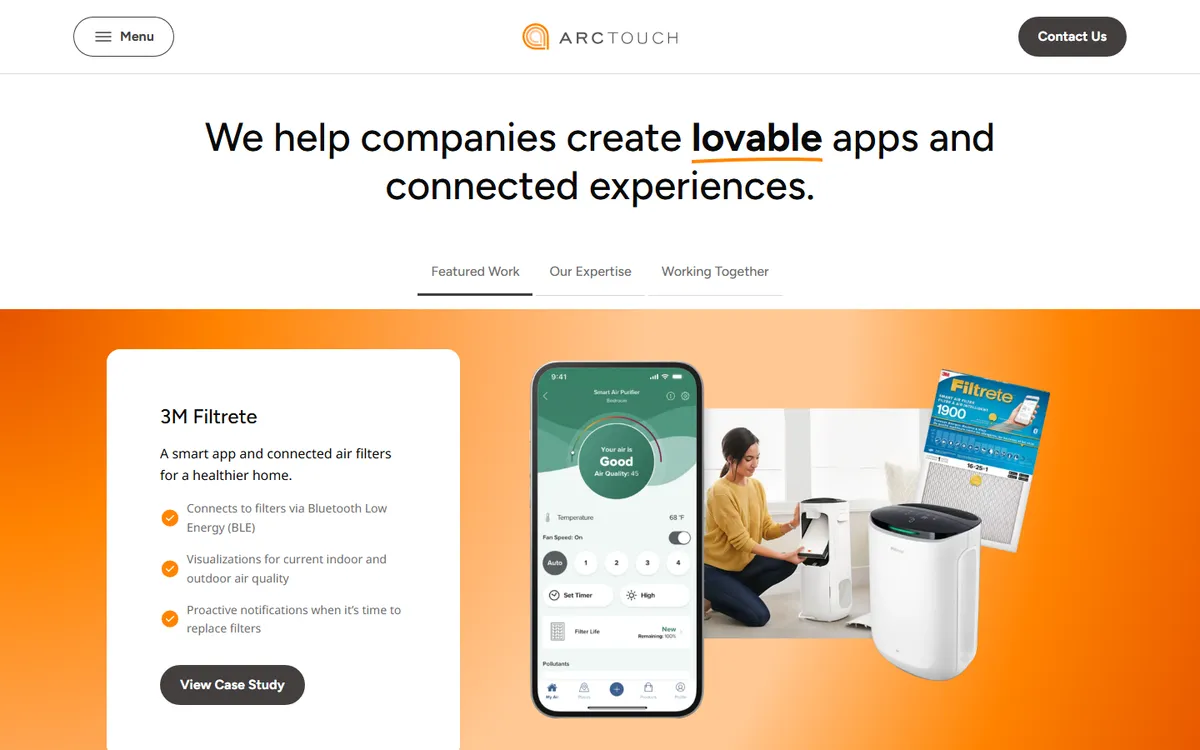
ArcTouch — cross-platform app development company in San Francisco
ArcTouch ships cross-platform and native delivery for consumer brands and connected-device makers, with a hybrid US-plus-Brazil delivery model. The Florianópolis team brings senior engineering at mid-band rates without losing the San Francisco product side. Connected device and IoT app experience is the firm's strongest signal. The fit is a US consumer or IoT product company that wants a senior partner with a same-time-zone US presence and a near-shore delivery center.
2. Sidebench
- Founded: 2012
- Offices: Los Angeles, California (USA)
- Hourly Rate: $150–$199/hr
- Industry Expertise: Healthcare, FinTech, Aerospace, Enterprise SaaS
- Reviews: 30+ reviews on Clutch, average rating 5.0/5
- Services: Cross-platform app development, custom software development, product strategy, UX/UI design
Sidebench — cross-platform app development company in Los Angeles
Sidebench delivers senior-only cross-platform and custom software for enterprise and regulated US clients, with a strong product strategy front-end. Healthcare, aerospace, and FinTech projects form the bulk of the portfolio. Engagements typically pair two senior engineers throughout, which keeps the rate band high but the throughput predictable. The fit is a US enterprise that wants a fully on-shore, senior-only partner and accepts a higher rate for tighter quality control.
3. Cleveroad
- Founded: 2011
- Offices: Claymont, Delaware (United States)
- Hourly Rate: $50–$99/hr
- Industry Expertise: FinTech, Healthcare, Logistics, EdTech, Retail
- Reviews: 100+ reviews on Clutch, average rating 4.9/5
- Services: Cross-platform app development, React Native development, mobile app development, web development, and AI development
Cleveroad — cross-platform app development company in the USA
Cleveroad's cross-platform delivery starts with the choice of technology. We pick React Native, Flutter, or .NET MAUI on a project-by-project basis, depending on team continuity, the scope of native modules, performance requirements, and the platform-specific feature load. Our engineers write native modules in Swift and Kotlin when the build requires them and integrate platform SDKs for biometric auth, Apple Pay, Google Pay, push notifications, and deep links. CodePush handles over-the-air updates, with shared component libraries keeping design parity across iOS and Android. We also tell clients honestly when a fully native split serves the product better than one codebase.
Cleveroad holds ISO 9001:2015 and ISO/IEC 27001:2013 certifications for quality management and information security management. We run a HIPAA-aware engagement model for healthcare apps and SOC 2-aligned controls for SaaS and B2B clients. Our development team delivers cross-platform solutions across industries, including FinTech, Healthcare, Logistics, EdTech, and Retail. Our firm is recognized as a Clutch Global Leader Fall 2025, a Clutch Spring Global Honoree 2025, and is featured in the Clutch 1000 ranking of top B2B service providers. For a one-codebase build that must comply with HIPAA, SOC 2, or state privacy laws like the CCPA and CPRA, our cross-platform app development services scope the architecture, ship iOS and Android from a single codebase, and provide post-launch support for the clients.
Evaluate Cleveroad's cross-platform development services to deliver consistent apps across iOS and Android and reduce time to market
4. Bottle Rocket Studios
- Founded: 2008
- Offices: Addison, Texas (USA); Cleveland, Ohio (USA)
- Hourly Rate: $150–$199/hr
- Industry Expertise: Retail, Media, Hospitality, Restaurants
- Reviews: 25+ reviews on Clutch, average rating 4.8/5
- Services: Cross-platform app development, native iOS and Android development, connected TV apps, digital strategy
Bottle Rocket Studios — cross-platform app development company in Texas
Bottle Rocket Studios runs large-scale cross-platform and connected-experience delivery for Fortune 500 retail, media, hospitality, and QSR brands. Connected TV apps sit alongside mobile inside the same engagement. Two US offices in Addison, Texas, and Cleveland, Ohio, handle delivery on a fully on-shore model. The fit is a US enterprise that wants a major studio with named work on national QSR, retail, and streaming-app launches.
5. Citrusbits
- Founded: 2005
- Offices: Los Angeles, California (USA)
- Hourly Rate: $50–$99/hr
- Industry Expertise: Healthcare, FinTech, Retail, Media
- Reviews: 40+ reviews on Clutch, average rating 4.9/5
- Services: Cross-platform app development, mobile app development, web development, growth marketing
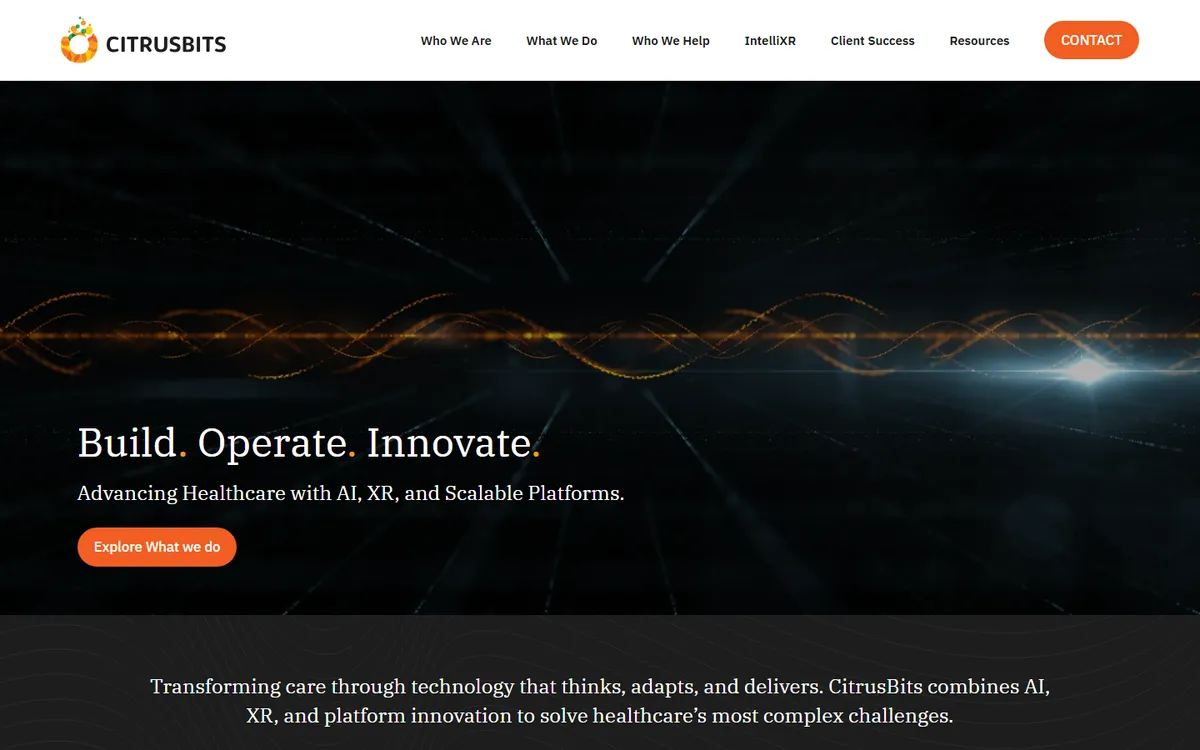
Citrusbits — cross-platform app development company in Los Angeles
Citrusbits ships cross-platform and web product delivery paired with an in-house growth marketing practice. Build and launch sit under one roof rather than across separate vendors. Healthcare and FinTech clients form the bulk of the regulated portfolio. The fit is a US founder or mid-market brand that wants a Los Angeles-anchored partner at a startup-friendly rate.
6. Yeti
- Founded: 2009
- Offices: San Francisco, California (USA)
- Hourly Rate: $150–$199/hr
- Industry Expertise: SaaS, Healthcare, Media, Consumer
- Reviews: 35+ reviews on Clutch, average rating 4.9/5
- Services: Cross-platform app development, native iOS and Android development, web development, product strategy
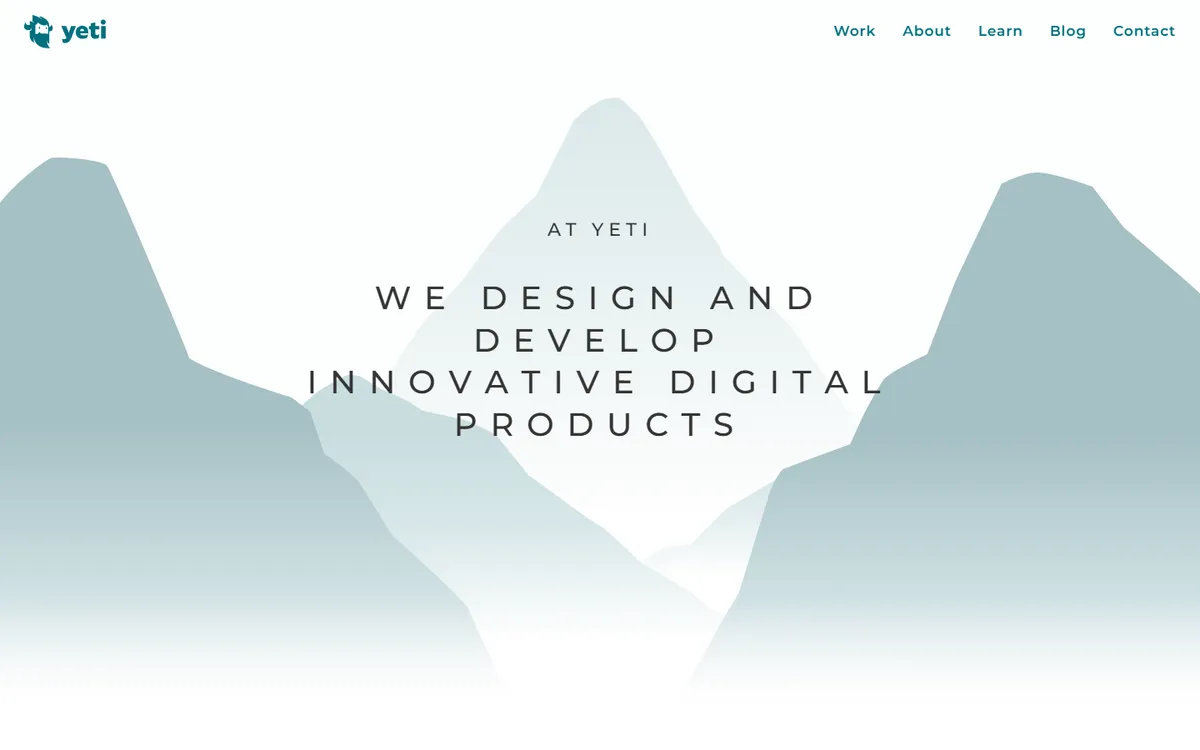
Yeti — cross-platform app development company in San Francisco
Yeti runs senior cross-platform and full-stack delivery for venture-backed SaaS and consumer products, based in San Francisco. Product strategy and engineering sit under the same roof, with a strong design culture in every engagement. Bay Area presence makes the firm a natural fit for venture-backed founders building on the West Coast. The fit is a US founder seeking a Bay Area-anchored partner with a strong design culture and a proven track record of named delivery on consumer-facing apps.
How to Choose a Cross-Platform Development Partner in the USA
A shortlist speeds up the first cut. The second cut requires a closer look at how each cross-platform app development company in the USA actually operates within regulatory and procurement realities. Use the section given below as a working evaluation framework, then run two or three vendors through it before signing a contract.
Confirm cross-platform specialization
A generic mobile shop can claim React Native or Flutter because the toolchain runs alongside native iOS and Android builds. A specialist can produce three things on request: named, one-codebase case studies with the architecture decisions explained; GitHub activity showing engineers contributing to or maintaining open-source React Native or Flutter packages; and engineering writing or conference talks at React Conf, Flutter Forward, or App.js. Without those signals, treat the cross-platform claim as a soft tag and ask the named lead engineer on the proposed team for proof. Cleveroad's mobile development services team treats this signal-checking as standard scoping.
Map the project to US regulatory expectations
Healthcare apps that handle protected health information are subject to HIPAA and require a Business Associate Agreement before any production data flows. B2B SaaS apps for enterprise buyers must comply with SOC 2 Type II, with annual audits expected by procurement. Apps touching payments must comply with PCI-DSS, with scope determined by what the app stores or processes. State privacy laws (CCPA and CPRA in California, VCDPA in Virginia, plus the patchwork in Colorado, Connecticut, and Utah) cover consumer data more broadly.
ADA and WCAG 2.2 AA form the accessibility baseline most enterprise procurement teams now require. Federal work answers to FedRAMP and the moderate or high baseline, depending on data sensitivity. A vendor who cannot speak to the rules that apply to your sector will spend your discovery budget learning them on your dime. For HealthTech buyers, healthcare software development experience is the proof point that matters most.
Confirm procurement readiness for federal and large-enterprise buyers
Federal and large-enterprise buyers check procurement credentials before they look at engineering credentials. Four signals worth asking for up front: a DUNS number, ISO/IEC 27001 certification, CMMI Level 3 or higher, and an active SAM.gov registration for federal panels. SOC 2 Type II reports and HIPAA Business Associate Agreements should be on file rather than requested ad hoc. None of these guarantees a good build, but their absence delays procurement and limits the budgets the vendor can take on.
Confirm the engagement model
A fully on-shore US firm with engineers in California, Texas, New York, or Atlanta is one thing. A firm with a US sales address and a delivery team in Latin America (typically Mexico, Brazil, Argentina, or Colombia) is another. Hybrid US-plus-offshore models, with delivery from Eastern Europe or South Asia, sit further out, with a wider time-zone gap and more coordination overhead. Each engagement model affects daily standups, code review cycles, and release cadence. Three questions on the first call: where do the engineers physically sit, what working hours do they keep, and how does the firm handle on-call coverage during launch.
Pin down code ownership and post-launch support
Your build should leave the engagement with full code ownership, a clean repository handover, and a documented support arrangement. Some vendors host the repository in their own GitHub or GitLab organization. Some bake code escrow into the SOW. Some offer a 90-day support window followed by a separate post-launch retainer. None of these arrangements is wrong by default, but each carries cost and exit-friction implications you want to see written into the contract before signing.
Match pricing bands to team composition and location
US cross-platform rates run roughly $50–$199/hr in USD bands. The lower band typically signals a hybrid US-plus-near-shore delivery model with a US sales front. The middle band signals a Midwest or Southeast mid-sized team. The upper band signals senior-only coastal studios in San Francisco, Los Angeles, or New York. None of those is automatically the right pick. A senior-only coastal studio at $180/hr can finish an MVP in fewer weeks than a junior-heavy near-shore team at $80/hr.
Validate reviews against real customers
Clutch reviews are the strongest single signal because Clutch contacts the reviewer directly to confirm the project. Cross-check named clients against LinkedIn. Current employees of the listed client should appear there, and the client's product should match the case study description. Ask the vendor for two reference customers in your sector. A firm that cannot or will not produce references in your domain is telling you something useful.
Discover how John Salmon partnered with Cleveroad to build a Flutter-based mobile solution for the US market, tailored to product goals and user needs:
John Salmon, Founder at Unified Potential, Inc.dba MoveUP. Feedback about cooperation with Cleveroad
Buyer's checklist
Run every shortlisted vendor through these questions before booking a scoping call:
- Can the vendor produce three named cross-platform case studies with architecture detail and named lead engineers?
- Does the firm have published engineers on LinkedIn with React Native or Flutter in their job history?
- Can the firm cite the regulatory frameworks that apply to your sector (HIPAA, SOC 2, PCI-DSS, CCPA/CPRA, FedRAMP)?
- Does the firm have ISO 27001, SOC 2 Type II reports, or HIPAA BAAs ready if your buyer needs them?
- Where are the engineers physically located and what working hours do they keep?
- Does the contract include full code ownership, repository handover, and a defined post-launch support window?
- What is the hourly rate band, and what is the seniority mix on the proposed team?
Green flags and red flags
Two short lists make the trust signals easier to scan. The green flags below are things vendors do consistently when they take their craft seriously. The red flags are reliable warning signs.
Green flags
- Published technical writing on the firm's blog or engineering Medium
- Conference talks at React Conf, Flutter Forward, App.js, or Mobile DevSummit
- Named React Native or Flutter engineers on LinkedIn with multi-year tenure at the firm
- SOC 2 Type II reports, HIPAA BAAs, or ISO 27001 certifications listed on the homepage or in the footer
- Transparent rate cards or fast estimate turnaround on a clear scope
Red flags
- Vague case studies with no client names, even under NDA paraphrasing
- No published team page or no engineers visible on LinkedIn
- Refusal to share repository samples or code excerpts on request
- Reluctance to answer regulatory questions on the first call
- A US address with no engineering bench actually based in the US
Making the Right Choice for Your Cross-Platform Project
Eight verified US cross-platform partners, screened across major hubs from California to Texas to Georgia to New York, give you a working starting point. The shortlist is the first 60 minutes of evaluation, not the last.
The methodology behind it (directories cross-checked, criteria applied) is what makes the list usable beyond a single afternoon. Run two or three of these firms through the buyer's checklist above, ask for reference customers in your sector, and confirm both the engagement model and procurement credentials before signing. If you already know you need a one-codebase mobile build for iOS and Android, our Delaware team can scope the engagement, ship from a single codebase, and stay on for post-launch support.
Build a cross-platform app with us
Share your product idea. Our team will scope the build and design the architecture, shipping a one-codebase mobile app for iOS and Android.
Hiring a cross-platform app development company in the USA typically costs between USD $80,000 and USD $400,000, with the larger range covering complex products that integrate payments, biometrics, third-party SDKs, or a custom backend. The variables that move the number are scope (single-platform parity vs full cross-platform parity with native modules), team composition (senior-only coastal studio vs Midwest mid-sized bench vs hybrid US-plus-near-shore model), regulated-industry overhead (HIPAA-aligned healthcare adds a Business Associate Agreement and audit hours, SOC 2-aligned SaaS adds an annual audit cycle, PCI-DSS scope adds a hardening review), and procurement model (direct engagement vs federal panel via SAM.gov). An MVP with a small feature set often closes around $80,000 to $150,000. A production build with payments and a custom backend generally lands $200,000 to $400,000.
Most US cross-platform projects ship in three to seven months across four phases:
- Discovery and architecture (2 to 4 weeks): scope, requirements, technical design, regulatory review.
- UX/UI design (3 to 6 weeks): user flows, mid-fidelity wireframes, high-fidelity mockups, design system handoff.
- Build (8 to 20 weeks): cross-platform development, native module work, backend integration, internal QA.
- Release and stabilization (2 to 4 weeks): App Store and Play Store submissions, beta testing, launch support, first-month bug fixes.
A fully on-shore US agency gives you Eastern, Central, Mountain, or Pacific time-zone overlap, contracts under US law, and a team that already speaks fluently to HIPAA, SOC 2, and PCI-DSS expectations. A hybrid US-plus-near-shore team typically blends US product leadership with engineering delivery from Mexico, Brazil, Argentina, or Colombia, which keeps daily working hours overlapping while bringing rates into a mid-band range. The trade-off is regulatory homework, on-call coverage during launch, and the extra coordination an offshore handoff adds to the daily review cycle.
The choice depends on team skills, UI consistency goals, and how much native depth the product needs. Choose React Native when you have JavaScript or TypeScript talent on the team and want the largest cross-platform ecosystem available. Choose Flutter when you want stronger UI consistency across iOS and Android out of the box, and your team is open to learning Dart. Choose native when the product depends heavily on platform-specific features (CarPlay, Android Auto, complex camera or AR pipelines) or when long-term per-platform performance is the dominant constraint. Many US product teams ship a React Native or Flutter shell with selective native modules, which our cross-platform app development team handles end-to-end.
Run every candidate through this verification checklist before booking a scoping call:
- Three named cross-platform case studies with architecture detail and named lead engineers
- Engineers visible on LinkedIn with multi-year React Native or Flutter tenure at the firm
- Verifiable Clutch reviews with named clients you can cross-check on LinkedIn
- A clear answer on HIPAA, SOC 2, PCI-DSS, or applicable state privacy laws if your project touches health, financial, payment, or consumer data
- ISO/IEC 27001 certification, SOC 2 Type II reports, or HIPAA BAAs available on file if your procurement needs them
- Two reference customers in your sector, available for a 30-minute call
- Repository samples or code excerpts available on request, even under NDA

Evgeniy Altynpara is a CTO and member of the Forbes Councils’ community of tech professionals. He is an expert in software development and technological entrepreneurship and has 10+years of experience in digital transformation consulting in Healthcare, FinTech, Supply Chain and Logistics
Give us your impressions about this article
Give us your impressions about this article