Enterprise LMS Development Services
- Enterprise-grade LMS architecture for complex organizations
- Security, compliance, and access control built into the core
- Long-term platform ownership with controlled scalability


Featured partners
Enterprise LMS Development Services
We design learning platforms around real enterprise constraints, ensuring predictable performance and controlled growth
Enterprise LMS development
Building custom LMS solutions around corporate training structures and role hierarchies, with architecture designed for enterprise-scale use and long-term stability
LMS code audit
Reviewing existing LMS codebases to uncover architectural weaknesses and system-level risks that affect scalability, compliance readiness, and long-term maintainability
Enterprise LMS modernization
Upgrading legacy LMS platforms to cloud-ready architectures while keeping training programs available and minimizing disruption to ongoing enterprise learning operations
AI-driven LMS optimization
Applying Artificial Intelligence to strengthen learning analytics and personalization, using real usage data to improve training efficiency and get measurable business outcomes
Core Enterprise LMS Modules We Build
We design modular LMS platforms where each module supports system evolution and alignment with internal training processes
Learner engagement and experience features
Live communication
Integrated video conferencing and live chat support structured lessons and guided training activities without disrupting existing enterprise learning workflows.
Gamification mechanics
Progress indicators, reward systems, achievements and other mechanics support sustained learner motivation and consistent participation training programs.
Learner profiles and activity feeds
Learner profiles display progress, achievements, and recent activity to support self-management and engagement across long-term training initiatives.
Content search and discovery
Search and filtering functionality supports fast access to relevant courses and materials as content volumes and enterprise taxonomies expand.
Educator content management features
Content authoring and editing
Structured authoring tools support creation and updates of learning materials using multimedia components without requiring technical involvement or platform access risks.
Content reuse and version control
Versioning and reusable content structures support consistent updates across courses while maintaining governance and reducing long-term maintenance overhead.
Assessment and feedback tools
Assessment tools support structured evaluation, progress measurement, and feedback collection to guide learner development within formal training programs.
Scheduling and session management
Scheduling functionality supports planning of lessons and live sessions with automated notifications to maintain consistency across distributed teams.
Platform administration features
User and role management
Role-based account management supports controlled access to platform features and content across departments and organizational units.
Course assignment and enrollment
Rule-based enrollment automates course distribution based on roles or learning paths, reducing manual effort and administrative complexity.
Access control and permissions
Permission models define viewing, editing, and management rights in line with internal security policies and governance requirements.
Certification and compliance tracking
Tracking functionality supports mandatory training completion, certificate status, and audit readiness across regulated environments.
Platform operations and support features
User support and service tools
Support workflows handle access issues and technical requests through structured processes that reduce resolution time and internal workload.
Cross-platform learning access
Responsive platform design ensures consistent learning experiences across desktop and mobile devices without functional limitations.
Payments and monetization
Payment functionality supports subscriptions and paid access models for partner training and extended enterprise learning programs.
Security and data protection
Security mechanisms support controlled access, data protection, backup processes, and recovery to maintain the reliability of the enterprise LMS platform.
Learning analytics and insights features
Learner progress tracking
Tracking tools monitor engagement and completion patterns over time to identify learning gaps across teams and organizational units.
Performance and completion reports
Reporting functionality provides clear visibility into learner outcomes and overall training effectiveness at both individual and organizational levels.
Content effectiveness analytics
Usage insights highlight learner interaction patterns to support content evaluation, optimization efforts, and continuous improvement decisions.
Custom dashboards and data exports
Configurable dashboards and export options support advanced analysis and seamless integration with enterprise reporting and analytics systems.
LMS Solutions We’ve Delivered
We deliver scalable LMS solutions suitable for enterprise-grade workflows and tailored to client business needs and product vision


USA
Healthcare
Key challenges addressed during delivery of a healthcare LMS:
- A secure learning platform designed for structured medical training, supporting formal education programs for healthcare professionals
- Role-based access and user governance implemented to separate learners, instructors, and administrators, meeting privacy rules
- Course management, assessment workflows, progress visibility, and reporting implemented to support continuous medical education


USA
Education
Challenges solved in learning operations platform development:
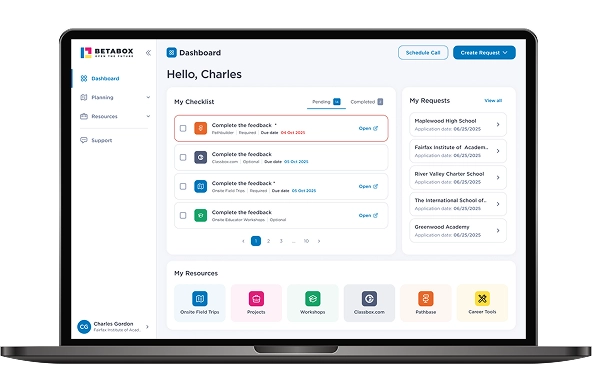
- A scalable LMS-based solution created to help K–12 educators submit requests and coordinate training across schools
- Workflow automation introduced to replace manual educator and administrative processes, reducing operational overhead
- A centralized system implemented for approvals, task coordination, and educator communication to ensure consistency and scalability
Learn about Cleveroad’s expertise in Projects Portfolio
in Projects Portfolio
Show moreOur Clients Say About Us

 Denmark
CTPO of Penneo A/S
"Cleveroad proved to be a reliable partner in helping augment our internal team with skilled technical specialists in cloud infrastructure."
Advanced AI Capabilities for Enterprise LMS Solutions
AI capabilities extend enterprise LMS platforms with advanced intelligence that supports learning delivery and management
Natural language processing (NLP)
Contextual understanding of learner questions
Text analysis within courses and assessments
Language-based interaction across LMS modules
Generative AI
Context-aware learning assistance
Adaptive content generation within courses
AI-supported instructional guidance
Machine learning (ML)
Automated assessment logic
Pattern detection in learner activity
Model-driven personalization controls
Predictive analytics and modeling
Engagement trend analysis
Skill gap prediction
Early risk identification
Technologies We Use for Enterprise LMSs
We select LMS technology stack to support enterprise-grade reliability and scalability, prioritizing tools suitable for complex IT environments
Certifications
We keep deepening our expertise to meet your highest expectations and build business innovative products


ISO 27001
Information Security Management System


ISO 9001
Quality Management Systems


AWS
Select Partner Tier


AWS
Solutions Architect, Associate


Scrum Alliance
Advanced Certified Scrum Product Owner


AWS
SysOps Administrator, Associate
Our Enterprise LMS Compliance Expertise
We build enterprise LMS platforms compliant with local and global regulatory requirements, ensuring your organization meets all rules
Data protection and privacy
- GDPR

- FERPA

- UK GDPR

- LGPD

- CCPA / CPRA
- PIPEDA

Security management
- ISO/IEC 27001

- ISO/IEC 27701
- SOC 2 Type II
- NIST Cybersecurity Framework
Accessibility and inclusive learning
- WCAG 2.1 / 2.2
- EN 301 549
- Section 508
- ADA Title III
Interoperability standards
- SCORM
- xAPI (Tin Can API)
- LTI
Flexible Engagement Models We Offer
Select one of our flexible collaboration options structured to support enterprise-scale LMS delivery and internal resource alignment
IT staff augmentation
Problem to solve:
Extend your team with the required tech expertise
Value delivered:
Expand your tech capabilities with the required IT experts
Fully manage specialists’ work as they are in your in-house team
Scale your team with a single developer or a full-stack unit
Dedicated team
Problem to solve:
Hire a development team for your EdTech project
Value delivered:
Get a pre-assembled, self-managing development team
Maintain direct communication for progress updates
Adjust team size flexibly based on project needs at any time
Custom development
Problem to solve:
Receive end-to-end EdTech development services
Value delivered:
Develop a tailored software solution aligned with your needs
Ensure a smooth development from idea validation to release
Build a scalable, high-performing product for long-term success
Industry Contribution Awards
70 clutch reviews
4.9


Award
Clutch 1000 Service Providers, 2024 Global


Award
Clutch Spring Award, 2025 Global


Ranking
Top AI Company,
2025 Award


Ranking
Top Software Developers, 2025 Award


Ranking
Top Web Developers, 2025 Award


Ranking
Top Staff Augmentation Company in USA, 2025 Award
Why Choose Us as Your Enterprise LMS Development Company
Our engineers use deep Education domain expertise with 15+ years of experience in IT to deliver software solutions for large enterprise needs



Cross-functional expertise in education and software engineering
Cleveroad combines education domain knowledge with enterprise software engineering expertise. We design LMS platforms tailored to real learning scenarios needs like certification programs, while implementing scalable enterprise-ready architectures and secure access models.
Integration-ready LMS platforms
Our development team designs LMS solutions to integrate smoothly with existing enterprise systems such as HRIS, ERP, CRM, identity providers, and analytics tools, ensuring your learning platforms operate as part of the broader digital ecosystem rather than isolated systems.
Enterprise-grade security and data protection
We build LMS platforms with security embedded into system architecture. This includes role-based access, secure authentication, data isolation, backup strategies, and recovery mechanisms designed to meet enterprise IT and compliance expectations across distributed environments.
Expertise in AI for LMS automation
Our AI engineers integrate production-ready AI models such as large language models, natural language processing, and machine learning into LMS platforms to support personalization, automated evaluation, and learning analytics at enterprise scale.
Key characteristics of an enterprise learning management system include scalability, governance, and structured learning paths that align with corporate training requirements. This type of learning management system supports both internal teams and extended enterprise scenarios while maintaining a consistent learning experience.
Security measures typically cover mobile learning, online learning, and social learning use cases. This approach allows organizations to run corporate training and extended enterprise LMS initiatives while meeting enterprise IT and regulatory expectations.
Typical integration scenarios include:
- HRIS and identity providers for access control and employee training synchronization
- Analytics systems for tracking learning programs and training program performance
Common AI-supported areas include:
- Personalized learning paths and adaptive recommendations
- Learning analytics for identifying trends in learning programs