RPA in Healthcare
- Reduce repetitive administrative work across scheduling, billing, claims, and patient data updates
- Improve accuracy in rule-based healthcare workflows with secure automation
- Give clinical and operations teams more time for patient care instead of manual data handling


Featured partners
RPA Use Cases in Healthcare
Healthcare RPA helps providers, payers, labs, pharmacies, and healthcare organizations automate tasks that slow down operations and overload staff
Patient and care operations automation
Appointment scheduling
RPA bots help manage appointment requests, confirmations, reminders, cancellations, and rescheduling without constant manual coordination.
Patient onboarding and registration
Automation simplifies patient intake by collecting, checking, and transferring registration data between portals, forms, and healthcare systems.
Patient data entry and EHR updates
RPA helps transfer structured patient data between forms, EHR/EMR systems, lab systems, billing software, and internal tools.
Remote monitoring and patient communication
Bots support patient engagement by automating routine messages, device data checks, alerts, and follow-up workflows.
Revenue cycle and back-office automation
Claims processing and medical billing
RPA supports billing teams by automating claim creation, validation, submission, status checks, payment posting, remittance processing, and denial management.
Prior authorization and insurance verification
Bots reduce payer-related delays by checking eligibility, collecting required documents, and routing prior authorization requests.
Regulatory compliance reporting
Automation helps healthcare organizations collect required data, generate reports, and maintain documentation for audits and compliance reviews.
Inventory and supply chain management
RPA improves visibility into medical supplies, pharmacy stock, lab materials, procurement workflows, inventory levels, and supplier performance.
RPA Services for Healthcare We Offer
Our healthcare RPA services cover the full automation cycle, from process assessment and bot development to system integration, and long-term support
RPA consulting and assessment
Analyzing your healthcare workflows to identify repetitive, rule-based tasks that can be automated without disrupting care delivery or compliance processes.
Custom healthcare RPA development
Building automation bots tailored to your scheduling, billing, claims, patient onboarding, reporting, inventory, and back-office workflows.
RPA integration with eHealth systems
Connecting RPA bots with the clinical, billing, and operational systems your teams already run, through APIs, HL7/FHIR, or UI-based automation where no API exists.
RPA support and maintenance
Monitoring automation performance, updating bots when workflows change, fixing errors, and improving RPA logic after release.
Benefits of RPA in Healthcare
RPA helps healthcare organizations reduce manual workload, improve data accuracy, and keep routine operations moving faster across departments
Lower administrative workload
Faster claims and billing cycles
Reduced operational costs
Fewer manual data errors
Stronger compliance and audit readiness
More staff time for patient care
RPA Solutions We've Delivered
A look at the automation and document-intelligence projects behind our healthcare RPA work, each built around the client's real workflows


USA
Healthcare
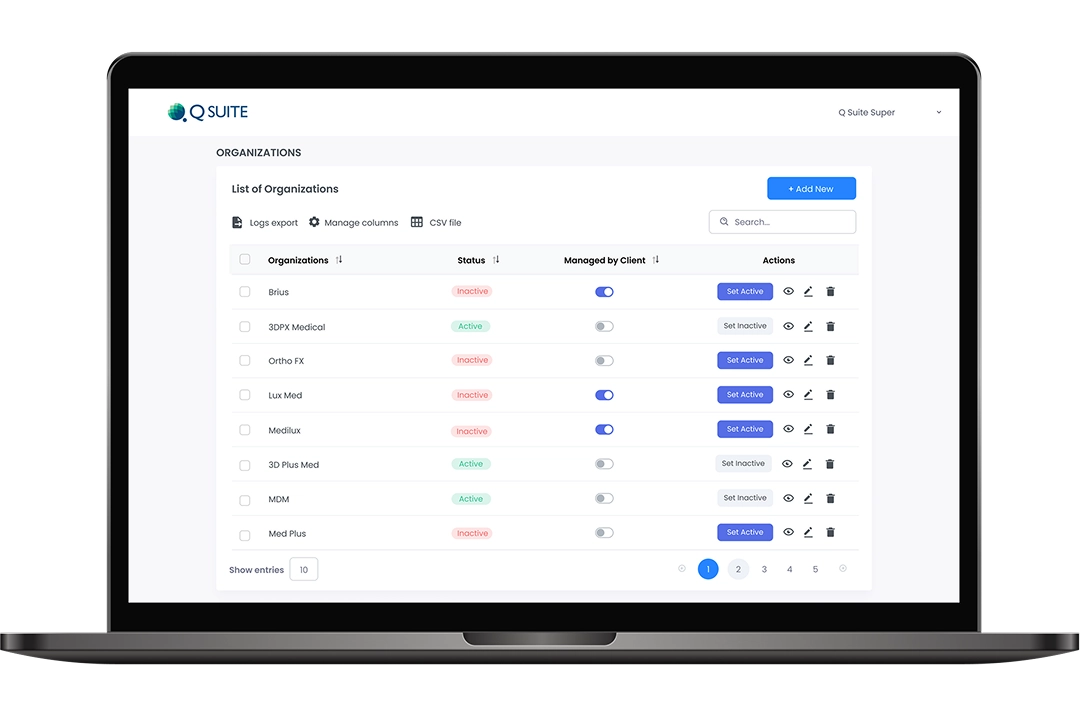
Challenges solved during the development of a cloud QMS for a US medtech company:
- Replacing a legacy Quickbase system with full data migration into a structured, audit-ready environment
- Automating document and certification workflows aligned with FDA 21 CFR Part 11 and ISO 13485
- Cutting audit preparation time by about 50% through automated compliance and reporting workflows


Norway
Insurance
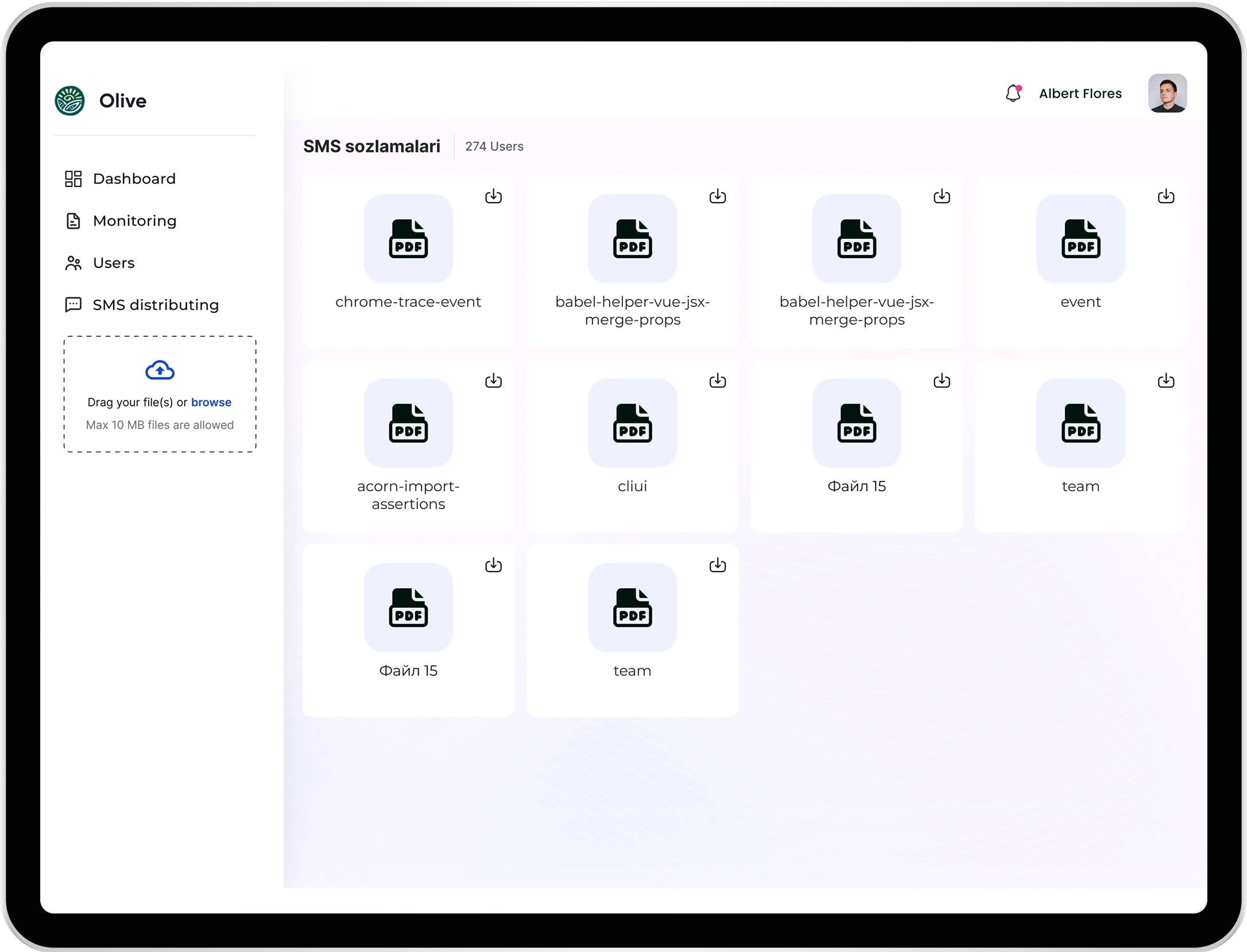
Challenges solved during the development of AI IDP for insurance document automation:
- Reviewing document workflows to find bottlenecks in classification and data handling
- Designing and testing a PoC for automated document classification and data extraction
- Validating 75% faster processing before scaling to full insurance document automation
Learn about Cleveroad’s expertise in Projects Portfolio
in Projects Portfolio
Show moreOur Clients Say About Us

 Denmark
CTPO of Penneo A/S
"Cleveroad proved to be a reliable partner in helping augment our internal team with skilled technical specialists in cloud infrastructure."
How RPA Integrates With Your Systems
We build healthcare RPA around the systems you already use, so automation supports your operations instead of forcing a full replacement
EHR/EMR systems
RPA bots can update records, transfer patient data, check appointment details, and support administrative workflows across core healthcare systems.
Medical billing and RCM software
Automation can support claim preparation, payer checks, denial tracking, payment posting, billing document processing, eligibility verification, and reconciliation.
LIMS and pharmacy systems
RPA helps transfer lab, medication, inventory, and order-related data between healthcare systems and specialized platforms.
Healthcare CRM and patient portals
Bots can automate patient communication, profile updates, form processing, case routing, and follow-up workflows.
RPA Tools We Use for Healthcare
Cleveroad picks the automation tools for each healthcare RPA project to fit your workflows, system access, integration needs, and compliance
UiPath
Automation Anywhere
Blue Prism
Microsoft Power Automate
WorkFusion
Robocorp
Zapier
Make
n8n
Camunda
Apache Airflow
ABBYY FlexiCapture
Google Document AI
Azure AI Document Intelligence
Amazon Textract
Tesseract OCR
Adobe PDF Services API
OpenAI API
Azure OpenAI Service
Anthropic API
TensorFlow
PyTorch
Scikit-learn
spaCy
Hugging Face
LangChain
Pandas
NumPy
LlamaIndex
AWS
Microsoft Azure
Google Cloud
Docker
Kubernetes
GitHub Actions
GitLab CI/CD
Prometheus
Grafana
Sentry
Certifications
We keep deepening our expertise to meet your highest expectations and build business innovative products


ISO 27001
Information Security Management System


ISO 9001
Quality Management Systems


AWS
Select Partner Tier

AWS
Solutions Architect, Associate

Scrum Alliance
Advanced Certified Scrum Product Owner

AWS
SysOps Administrator, Associate
Our Expertise in Healthcare Regulations
We treat regulatory compliance as part of healthcare RPA architecture, with privacy, traceability, and security requirements considered before automation
Security & data privacy standards
- HIPAA

- ISO/IEC 27001

- GDPR

- SOC 2 Type II
- CCPA / CPRA
- PIPEDA

Billing & claims standards
- X12 EDI
- ERA / EFT
- CMS-1500
- CMS billing
- UB-04
- NCPDP
Clinical data standards
- HL7
- LOINC
- FHIR
- SNOMED CT
- ICD-10
- CPT
Audit & compliance reporting standards
- FDA 21 CFR Part 11
- Electronic records
- CMS reporting requirements
- Data retention policies
- Audit trail
- RBAC
Flexible Engagement Models We Offer
Choose one of our flexible collaboration options that matches your resource needs and healthcare RPA development requirements
IT staff augmentation
Problem to solve:
Extend your team with the required tech expertise
Value delivered:
Expand your tech capabilities with the required IT experts
Fully manage specialists’ work as they are in your in-house team
Scale your team with a single developer or a full-stack unit
Dedicated team
Problem to solve:
Hire a development team for your healthcare RPA project
Value delivered:
Get a pre-assembled, self-managing development team
Maintain direct communication for progress updates
Adjust team size flexibly based on project needs at any time
Custom development
Problem to solve:
Receive end-to-end healthcare RPA
Value delivered:
Develop a tailored software solution aligned with your needs
Ensure a smooth development from idea validation to release
Build a scalable, high-performing product for long-term success
Industry Contribution Awards
70 clutch reviews
4.9



Award
Clutch 1000 Service Providers, 2024 Global


Award
Clutch Spring Award, 2025 Global


Ranking
Top AI Company,
2025 Award


Ranking
Top Software Developers, 2025 Award


Ranking
Top Web Developers, 2025 Award

Ranking
Top Staff Augmentation Company in USA, 2025 Award
Why Choose Cleveroad for RPA
Cleveroad combines healthcare software expertise with a compliance-first automation approach to build RPA solutions that support secure healthcare operations



Proven healthcare software and automation expertise
We have 15+ years of experience building healthcare software and automation solutions for clients in the US and Europe. Our team has delivered patient portals, healthcare integrations, data migration solutions, and automation-ready systems that support real operational workflows.
Compliance-first development approach
Our team considers privacy, security, access control, auditability, and data integrity from the discovery stage. We design healthcare RPA workflows with the required regulatory framework in mind before development starts.
Experience integrating with core healthcare systems
We connect automation bots across your clinical, billing, and patient-facing systems, including older platforms with no modern API. Where a direct connection exists, bots use it where it doesn't, they work through the interface the way a person would.
Flexible cooperation models to choose from
You can work with us through staff augmentation, a dedicated team, or full-cycle custom development. You can also use our AI-assisted development model to speed up discovery, prototyping, documentation, and repetitive engineering tasks while keeping quality.
Typical timelines include:
- 2-4 weeks for automating one simple workflow
- 6-12 weeks for several connected workflows with system integrations
- 3-6+ months for complex automation programs across departments
- Additional time for legacy systems, data quality issues, compliance checks, and user training
- Modern systems with APIs or HL7/FHIR interfaces connect directly
- Legacy or closed systems are automated through UI-based actions, the way a person would click through them
- Document-heavy workflows use OCR and data extraction to read scans, PDFs, and forms
- Poorly documented workflows
- Legacy systems with limited integration options
- Inconsistent or incomplete data
- Frequent workflow changes
- Compliance and audit requirements
- Staff adoption and change management
- Bot maintenance after system updates
The final estimate depends on:
- Number of workflows to automate
- Complexity of business rules
- Number of systems involved
- Integration method required
- Volume and quality of processed data
- Security and compliance requirements
- Bot monitoring, support, and maintenance needs